Sunday, November 17, 2013

Comet Ison Brightening

No, this isn't oceanography.  But it is significant for everyone interested in science in general.


Comet McNaught in 2007.  Image credit: Siding Spring Observatory.

Comet ISON continues to brighten.  Check out this article from UniverseToday.com

http://www.universetoday.com/106404/comet-ison-suddenly-brightens-as-it-dives-toward-the-sun/

And here's the link to the Hubble Site blog:
http://hubblesite.org/hubble_discoveries/comet_ison

Thursday, November 7, 2013

A Tale of Two Seasons

File:2013 Pacific typhoon season summary.png
Image Credit - Wikipedia.

I read some tropical stats on the 2013 hurricane seasons.  The stark differences are staggering:

Atlantic
Tropical Depressions - 13
Tropical Storms - 12
Hurricanes - 2
Major Hurricanes (Cat 3 or higher) - 0

Eastern Pacific
Tropical Depressions - 21
Tropical Storms - 20
Hurricanes - 9
Major Hurricanes (Cat 3 or higher) - 1

Western Pacific
Tropical Depressions - 48
Tropical Storms - 30
Hurricanes - 13
Major Hurricanes (Cat 3 or higher) - 5

Here's the link to Wikipedia's portal for global tropical cyclones.  They give an excellent summary:
http://en.wikipedia.org/wiki/Portal:Tropical_cyclones

Here's the link to NASA's post on Earth Observatory about Super Typhoon Haiyan.
http://earthobservatory.nasa.gov/NaturalHazards/view.php?id=82341&eocn=home&eoci=nh

Here's another link to s superb summary on Weather Underground:
http://www.wunderground.com/blog/JeffMasters/comment.html?entrynum=2573

Sunday, November 3, 2013

Do You Like to Sing?

Do sing a lot? Or at least listen to a lot of music? Well for decades there's been much speculation about our noisy relatives in the ocean, marine mammals in general and cetaceans in particular.


Here's an interesting article, courtesy of the BBC Nature crew (always a source of outstanding videography and research):

http://www.bbc.co.uk/news/uk-england-norfolk-24745910

Tuesday, October 29, 2013

Where were you on October 29, 2012?


Sandy, one year ago...to me it seems that the past year has flown by.  Although, for sure, the weeks in the immediate aftermath of Sandy here on Long Island, NY, seemed to drag on at a snail's pace.  The damage, the disruption, the turmoil, no electricity, the lack of gas, etc., etc., etc....

Here's a link to NOAA's before and after pics as well as some of their additional resources:
http://oceanservice.noaa.gov/news/weeklynews/oct13/sandy-imagery.html

Here's a link to CBS News Radio 880's retrospective (they have other resources on their homepage, too):
http://newyork.cbslocal.com/photo-galleries/2013/10/28/sandy-one-year-later-2/

Retrospectives abound on various other websites.

We remember.  We pray for those still trying to piece their lives back together.  We rebuild.

Wednesday, October 23, 2013

Coral Helping Protect Against Global Warming?


Check out this article (credit - Science Daily.com) on how new discoveries show that coral might actually help in regulating climate.


Coral Itself May Play Important Role in Regulating Local Climate: Coral Chemicals Protect Against Warming Oceans

Oct. 23, 2013 — A new article reveals coral animals produce the 'smell of the ocean' -- influencing cloud formation and protecting themselves against rising seawater temperatures.

Share This:
Australian marine scientists have found the first evidence that coral itself may play an important role in regulating local climate.
They have discovered that the coral animal -- not just its algal symbiont -- makes an important sulphur-based molecule with properties to assist it in many ways, ranging from cellular protection in times of heat stress to local climate cooling by encouraging clouds to form.
These findings have been published in the science journalNature.
The researchers have shown that the coral animal makes dimethylsulphoniopropionate (DMSP). "The characteristic 'smell of the ocean' is actually derived from this compound, indicating how abundant the molecule is in the marine environment. In fact we could smell it in a single baby coral," says AIMS chemist Cherie Motti, and co-author on the paper.
"This is the first time that an animal has been identified as a DMSP producer. Previously it was assumed that the large concentrations of DMSP emitted from coral reefs came solely from their symbiotic algae," says lead author Jean-Baptiste Raina, of AIMS@JCU and the ARC Centre of Excellence for Coral Reef Studies at James Cook University (CoECRS).
Production of DMSP was found to increase when corals are subjected to water temperatures that put them under heat stress. DMSP and its breakdown products act as antioxidants (chemical defence compounds) protecting coral tissues from environmental stress, including that caused by high solar radiation.
The sulphur-based molecules also serve as nuclei for the formation of water droplets in the atmosphere -- and hence help to create clouds. If coral numbers decline, the scientists warn, there could be a major decrease in the production of DMSP and this, in turn, will impede cloud formation.
"Cloud production, especially in the tropics, is an important regulator of climate -- because clouds shade Earth and reflect much of the sun's heat back into space. If fewer clouds are produced, less heat will be reflected -- which ultimately will lead to warmer sea surface temperatures," Dr Raina explains.
Australia's Great Barrier Reef is a major hotspot for the emission of sulphur aerosol particles, according to the scientists. "The GBR is the largest biological structure on the planet and the release of these particles along its 2600 km length could constitute a major source of cloud condensation nuclei," the authors write in their paper.
"Considering declining trends in coral cover and predicted increases in coral mortality worldwide caused by anthropogenic stressors, the associated decline in sulphur aerosol production from coral reefs may further destabilise local climate regulation and accelerate degradation of this globally important and diverse ecosystem."
The researchers are from the Australian Institute of Marine Science (AIMS), the ARC Centre of Excellence for Coral Reef Studies at James Cook University (CoECRS), the University of Western Australia (UWA), Murdoch University (MU) and the Australian National University (ANU).

The above story is based on materials provided by Science in Public.
Note: Materials may be edited for content and length. For further information, please contact the source cited above.

Journal Reference:
  1. Jean-Baptiste Raina, Dianne M. Tapiolas, Sylvain ForĂȘt, Adrian Lutz, David Abrego, Janja Ceh, François O. Seneca, Peta L. Clode, David G. Bourne, Bette L. Willis, Cherie A. Motti. DMSP biosynthesis by an animal and its role in coral thermal stress responseNature, 2013; DOI:10.1038/nature12677
 APA

 MLA
Science in Public (2013, October 23). Coral itself may play important role in regulating local climate: Coral chemicals protect against warming oceans. ScienceDaily. Retrieved October 23, 2013, from http://www.sciencedaily.com­/releases/2013/10/131023165248.htm
Note: If no author is given, the source is cited instead.

Saturday, October 19, 2013

Ocean Warming Dangers

I came across this disturbing article from the Environmental News Service earlier today.  The world ocean is at its warmest ever, according to the NCDC in Maryland.  If this is correct, and it continues to warm, what could happen? Read on for some more insights...


Climate Change to Cause ‘Massive’ Ocean Damage by 2100

Posted by News Editor in Air/Climate, Latest News, Oceans, RSS on October 18, 2013 11:47 am / no comments

HONOLULU, Hawaii, October 18, 2013 (ENS) – By the year 2100, about 98 percent of the oceans will be affected by acidification, warming temperatures, low oxygen, or lack of biological productivity, and most areas will be hit by a multitude of these stressors, finds a new study of the impacts of climate change on the world’s ocean systems.

These biogeochemical changes triggered by human-generated greenhouse gas emissions will not only affect marine habitats and organisms, but will often also occur in areas that are heavily used by humans, concludes the international team of 28 scientists.


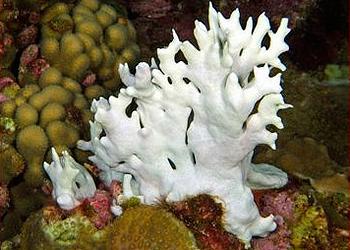
Bleached fire coral colony at Flower Garden Banks National Marine Sanctuary, Gulf of Mexico (Photo by Joyce & Frank Burek courtesy NOAA)

“When you look at the world ocean, there are few places that will be free of changes; most will suffer the simultaneous effects of warming, acidification, and reductions in oxygen and productivity,” said lead author Camilo Mora, an assistant professor at the Department of Geography at the University of Hawaii at Manoa.

“The consequences of these co-occurring changes are massive – everything from species survival, to abundance, to range size, to body size, to species richness, to ecosystem functioning are affected by changes in ocean biogeochemistry,” said Mora.

Mora and Craig Smith with U-H Manoa’s School of Ocean and Earth Science and Technology worked with a 28-person international collaboration of climate modelers, biogeochemists, oceanographers, and social scientists to develop the study, which is published in the scientific journal “PLOS Biology.”

The human ramifications of these changes are likely to be massive and disruptive, the scientists predict. Food chains, fishing, and tourism could all be impacted.

The study shows that some 470 to 870 million of the world’s poorest people rely on the ocean for food, jobs, and revenues, and live in countries where ocean goods and services could be compromised by multiple ocean biogeochemical changes.


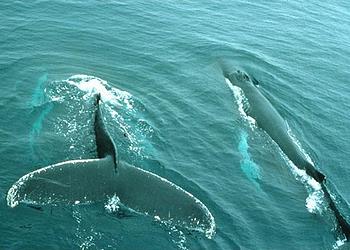
Humpback whales are among the many whales that feed on krill, which will be subject to multiple climate stressors. (Photo courtesy International Whaling Commission)

The researchers used the most recent and robust models of projected climate change developed for the Fifth Assessment Report of the Intergovernmental Panel on Climate Change to inform their analysis.

They quantified the extent of co-occurrence of changes in temperature, pH, oxygen, and primary productivity based on two scenarios – a business-as-usual scenario wherein atmospheric carbon dioxide, CO2, concentrations could reach 900 ppm by 2100, and an alternative scenario under which concentrations only reach 550 ppm by 2100.

The scientists said this second scenario would only result from a concerted, rapid CO2 mitigation effort, beginning today.

They discovered that most of the world’s ocean surface will be simultaneously impacted by varying intensities of ocean warming, acidification, oxygen depletion, or shortfalls in productivity.

Only a very small fraction of the oceans, mostly in polar regions, will face the opposing effects of increases in oxygen or productivity, and nowhere will there be cooling or pH increase.

“Even the seemingly positive changes at high latitudes are not necessary beneficial. Invasive species have been immigrating to these areas due to changing ocean conditions and will threaten the local species and the humans who depend on them,” said co-author Chih-Lin Wei, a postdoctoral fellow at Ocean Science Centre, Memorial University of Newfoundland, Canada.


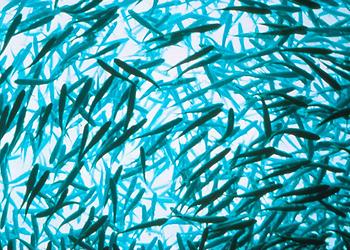
A swirling mass of jack mackerel draws feeding seabirds and marine mammals. (Photo courtesy Gulf of the Farallones National Marine Sanctuary, California)

Co-author Lisa Levin, a professor at Scripps Institution of Oceanography at the University of California, San Diego, warns, “Because many deep-sea ecosystems are so stable, even small changes in temperature, oxygen, and pH may lower the resilience of deep-sea communities. This is a growing concern as humans extract more resources and create more disturbances in the deep ocean.”

The researchers assembled global distribution maps of 32 marine habitats and biodiversity hotspots to assess their potential vulnerability to the changes.

As a final step, they used available data on human dependency on ocean goods and services and social adaptability to estimate the vulnerability of coastal populations to the projected ocean biogeochemical changes.

“Other studies have looked at small-scale impacts, but this is the first time that we’ve been able to look the entire world ocean and how co-occurring stressors will differentially impact the Earth’s diverse habitats and people,” said co-author Andrew Thurber, a Scripps alumnus and now a postdoctoral fellow at Oregon State University.

“The impacts of climate change will be felt from the ocean surface to the seafloor. It is truly scary to consider how vast these impacts will be,” said co-author Andrew Sweetman, who helped to convene the original team of investigators and now leads the deep-sea ecosystem research group at the International Research Institute of Stavanger, Norway. “This is one legacy that we as humans should not be allowed to ignore.”

Results of the study are published in the current issue of the journal “PLoS Biology.” It was funded by SeaGrant Hawaii, the Norwegian Research Council and the International Network for Scientific Investigation of Deep-sea Ecosystems.

Copyright Environment News Service (ENS) 2013. All rights reserved.

ENS RELATED REPORTS:

Climate Shift Signals Higher Sea-levels on U.S. West Coast

56 Corals in U.S. Waters ‘Likely’ to Vanish by…

Rising Seas Forecast to Flood U.S. Coastal Cities by 2100

U.S. Record High Temperatures Double Record Lows Since 2000

Ancient Climate History Foreshadows Rapid Future Climate…

CO2 Carried Into Southern Ocean Depths

Climate Heat Now Exceeds Most of Past 11,300 Years

Eight Local Governments First to Get Climate Adaptation Help

Mass Extinction of Ocean Species Soon to Be…

U.S. Naval Forces Advised to Improve Readiness for Climate…

Wednesday, October 16, 2013

No Algae is a harmless shade of green...

Here's a disturbing article from Environmental News Service.  It's from late August, but I just read it yesterday.  I'm a bit behind in my reading.


Florida Waters Alive With Toxic Algae, Toxic Politics

Posted by News Editor in Land Use, Latest News, RSS, Water on August 21, 2013 7:15 pm / no comments
STUART, Florida, August 21, 2013 (ENS) – Environmental groups rallied today ahead of a Florida State Senate Select Committee public meeting, demanding that government act to stop toxic algae slimes that are sickening people and killing dolphins, manatees, birds and fish in two areas of the state.

On Florida’s southeast coast, the St. Lucie River, its estuary, and the Indian River Lagoon are slimed with algae that grow on excess sewage, manure, and fertilizer runoff released locally and from Lake Okeechobee to the north. Most of the nutrient pollution entering Lake Okeechobee comes from tributaries in the northern Everglades that take runoff from the Everglades Agricultural Area, which grows most of the sugarcane in the United States.


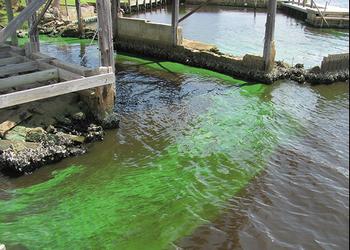
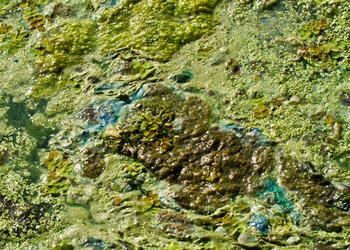
Algae contaminates the St. Lucie River in Stuart, Florida, August 1, 2013. (Photo © Dick Miller courtesyEarthjustice)

The St. Lucie River also is experiencing unprecedented levels of bacteria; Martin County health officials have warned the public to avoid contact with the water.

Also affected by the slimy mess are the Caloosahatchee River and its Gulf of Mexico estuary on Florida’s southwest coast.

Members of the Sierra Club, Florida Wildlife Federation, Earthjustice, Florida Oceanographic Society and the Conservancy of Southwest Florida said at the rally that state and federal officials have known about these nutrient pollution issues for 30 years, and have yet to take meaningful action to stop the problem at its source.

“This is an emergency,” said Sierra Club Florida Staff Director Frank Jackalone. “We need a statewide emergency management plan to deal with it. We know how to prevent this pollution and we need to start doing it.”

The fluorescent green and black slime of toxic algae is the environment’s response to nutrient runoff made worse by this season’s heavy rainfall. The South Florida Water Management District says July’s soaking of South Florida that capped the wettest start to the wet season since 1968 has made the situation worse. District meteorologists reported the wettest April-July period on record in South Florida since 1932.

State Senator Joe Negron, a Republican who chairs the Select Committee on Indian River Lagoon and Lake Okeechobee Basin, is holding a committee hearing in Stuart on Thursday to come up with “short-term” solutions to the toxic algae outbreaks.

On August 7, Negron announced the creation of a website for collecting public comments on the economic and environmental impacts of ongoing releases of nutrient-contaminated from Lake Okeechobee into the Indian River Lagoon as well as accepting suggestions for short-term solutions or alternatives.

“Constituents have the option of leaving a comment related to a specific subtopic, such as pollution or property values, or a general comment about how Florida should address the economic and environmental impacts caused by the ongoing releases from Lake Okeechobee,” said Negron.

The environmental groups have plenty of advice for the Select Committee. “Septic tanks need to be cleaned out and connected to treatment plants, failing sewer lines that pour sewage into the estuary need to be replaced, sewage treatment plants must be upgraded, fertilizer ordinances must be adopted statewide, and, most importantly, agricultural pollution – the primary source of the filthy water into Lake Okeechobee – needs to be regulated,” they said in a statement today.


Algal blooms can look like a thick mat or foamy scum. Blooms can change the water color to blue, green, brown, orange, or red and may give off an unpleasant odor. (Photo © John Moran courtesy Earthjustice)

“Both the state and federal governments have slime on their hands,” said Earthjustice attorney Monica Reimer.

“The U.S. Army Corps of Engineers is responsible because it is not fixing a failing 80-year-old reservoir system that’s operated at the behest of Big Sugar, instead of for the citizens of this state,” said Reimer.

“The state is responsible because it is sending filthy water into Lake Okeechobee and refusing to control the pollution at its source,” she said. “Taxpayers end up paying for the cleanup because government isn’t doing its job to prevent this.”

In July, environmental groups filed a lawsuit alleging the U.S. Army Corps of Engineers has damaged the Caloosahatchee River by failing to release enough fresh, clean water from Lake Okeechobee.

The plaintiff groups, Earthjustice, the Conservancy of Southwest Florida and Florida Wildlife Federation, hope a federal judge will order the Corps to maintain freshwater flow levels that, they say, are already mandated by state law.

Water testing by the Florida Department of Environmental Protection shows that algae toxin levels in the St. Lucie River estuary have reached levels 287 times the safe limit for human recreational activities.

They also reveal algae is present which produce neurotoxins that affect the brain, but no further testing for those neurotoxins was done.

Published scientific research has confirmed the widespread presence of a type of cyanotoxin linked to Parkinson’s and Alzheimer’s-like symptoms in Florida coastal waters, yet no testing for that cyanotoxin was performed by the DEP.

Instead of preventing the pollution problem at its source, the Scott Administration “has been allowing polluter lobbyists to write their own loophole-ridden mumbo-jumbo that does little to regulate the sewage, manure and fertilizer pollution that sparks these nasty toxic algae outbreaks,” the environmentalists warn.

The environmental groups contend that the latest Florida standards for nutrient pollution leave two-thirds of the state’s waters without nutrient pollution limits, including all South Florida flowing waters, all canals, all tidal creeks, all intermittent streams, and all “physically altered flowing waters that are used for water management.”

“On the west coast, we have dead oyster beds, poisoned drinking water, and algae outbreaks off Sanibel Island and the Caloosahatchee River,” said Jennifer Hecker, director of Natural Resource Policy, Conservancy of Southwest Florida. “The fact is, the state is not protecting the public.”

The Florida Senate Select Committee on Indian River Lagoon and Lake Okeechobee Basin will meet on Thursday, August 22, 2013, from 1:00 pm to 9:00 pm at the Charles and Rae Kane Center in Stuart. They will receive expert and public testimony on activities affecting water management in the Indian River Lagoon and Lake Okeechobee Basin.


Florida Governor Rick Scott meets with oystermen in Franklin County where algal outbreaks have occurred in the past, August 13, 2013 (Photo by Meredyth Hope Hall courtesy Office of the Governor)

The Select Committee has invited U.S. Senator Patrick Murphy, a Florida Democrat, to speak at the public meeting. Murphy represents Florida’s 18th Congressional District, which includes Stuart and the St. Lucie area.

Senator Murphy has invited Governor Rick Scott to Washington to work with federal officials on correcting the conditions causing the algal outbreaks. His letter of invitation states, “There is no action too big or small to be considered to save our waters, and no one, especially government officials, can say that this isn’t their problem – we must work together to address this multi-faceted crisis on the federal, state, and local levels.”

The governor has not indicated whether or not he will accept Murphy’s invitation.

Today, Scott toured the St. Lucie Lock to view the algal mess for himself, but he ignored some 300 demonstrators who chanted “Save our river,” looking at the water and then leaving without acknowledging them.

On Tuesday, Scott announced a $40 million budget proposal to speed up completion of the C-44 Storm Water Treatment Area project. The project will clean diverted water from Lake Okeechobee and stormwater runoff year-round.

The governor blamed the federal government for failing to meet its obligations in maintaining the federally operated Lake Okeechobee dike system and fulfilling its cost-share obligations to the State of Florida for environmental projects.

Scott said, “We’re here because the Corps is not maintaining the Lake Okeechobee dike system and they’re not fulfilling their financial commitment to Florida. Florida families are paying the price for federal inaction. Despite federal inaction, we are speeding up solutions because Florida’s families and the environment can’t wait any longer.

But the environmental groups today called the governor’s $40 million announcement a “Band-aid” that only treats the symptoms, not the causes, of the toxic outbreaks.

They said the proposed funding would only address a fraction of the contaminated runoff that is sliming Florida’s springs, rivers, lakes and bays, “killing wildlife, hurting property values and devastating tourism revenue.”

Copyright Environment News Service (ENS) 2013. All rights reserved.

ENS RELATED REPORTS:

Forecasts to Warn of Toxic Algae Along the Texas Coast

It Takes a Special Algae to Make Biofuel

DuPont Fined $3.3 Million for Toxic Chemical Reporting…

Vessel Sewage Banned in Florida Keys National Marine…

TVA Permit to Dump Liquid Waste from Air Scrubbers Appealed

Gulf of Mexico Dolphins Sick, Dying After BP Oil Spill

Settlement Ends U.S. Production of Toxic Short-Chain…

EPA’s New Mercury and Air Toxics Standards Survive…

Florida Eases Beach Restoration Standards as BP Dollars Roll

India’s Defence Ministry to Incinerate Bhopal Toxic…